Quick Answer: Clearing and grubbing are two separate steps that turn a wooded or overgrown lot into ground a builder can work with. Clearing removes what's growing above the surface — trees, brush, and vegetation. Grubbing goes below it, pulling out stumps, root balls, and buried organic material that would otherwise rot underground and cause the soil above it to settle unevenly. Both happen before any grading, compaction, or foundation work begins, and skipping grubbing to save a step is one of the more common reasons a site develops soft spots months or years after construction wraps up.
A lot that looks buildable from the road often tells a different story once you walk it. Maple saplings crowding the fence line. A stand of pines sitting right where the driveway needs to go. Decades of brush and deadfall tangled through the low spots that never show up on a plat map. All of it stands between a raw parcel and ground a contractor can actually grade, and before an excavator ever touches subgrade, that vegetation and everything tangled beneath it has to come out. That's clearing and grubbing — two different jobs that get treated as one word far more often than they should.
Clearing: What Comes Off the Surface
Clearing is the first pass across a raw lot. It strips away everything growing above ground level that would block equipment, get in the way of grading, or sit inside the building footprint.
What Gets Cleared
Trees, brush, saplings, briars, fallen limbs, and overgrown grass or scrub within the construction limits all come out at this stage. A heavily wooded parcel might mean removing a real stand of timber. A former field or pasture might only need the fence rows and volunteer growth taken down.
Equipment Used
Crews typically reach for forestry mulchers, skid steers, chainsaws, and brush cutters on smaller vegetation, then move up to excavators once the trees get bigger. Which tool gets used comes down to tree density and whether the material is being hauled off or mulched right there on site.
Here's what clearing doesn't touch, though: once the trees are down and the brush is hauled off, the stumps and root systems are still sitting in the ground exactly where they were. A cleared lot can look ready for a foundation from the road. It isn't. The subsurface work hasn't even started.
Grubbing: Why What's Underground Matters Just as Much
Grubbing picks up where clearing leaves off. It pulls the stumps, root balls, buried logs, and other organic material out from below the surface — work that takes a lot more digging than cutting.
The Equipment Does The Work Below Grade
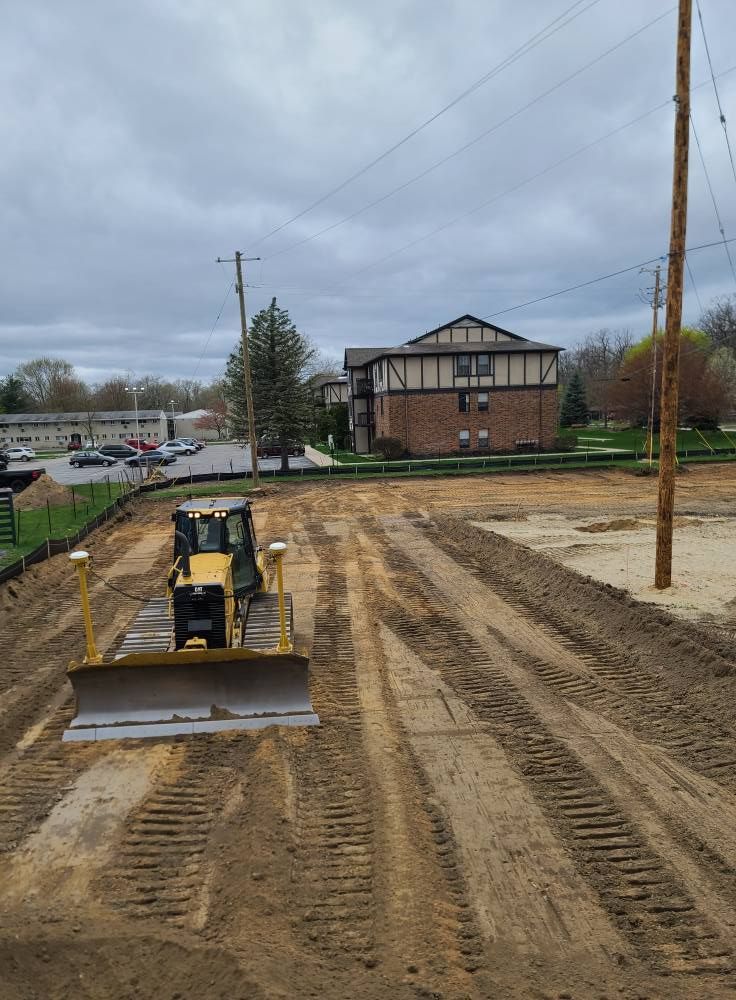
An excavator or bulldozer pulls stumps and root masses out of the ground rather than grinding them down at the surface. Grub buckets and root rakes show up a lot on this kind of work because they sift soil away from roots and debris faster than a standard bucket can.
Grinding A Stump Down Is Not The Same Thing As Grubbing It Out
A grinder chews the visible stump into chips at or below grade and calls it done, but the roots underneath stay put and keep spreading through the soil. Fine for a spot that's only ever going to get seeded or landscaped. Not fine anywhere a foundation, driveway, septic field, or compacted fill is headed, because those roots don't just sit there quietly forever.
They rot. And that's the part a lot of property owners don't think about until it's already a problem: organic material buried under compacted soil breaks down over time, and as it does, it leaves voids and soft pockets behind. Those show up later as uneven settling under a slab, cracking in a driveway, or a low spot in an otherwise flat yard — sometimes not for a year or more, once the wood has had time to fully decompose.
WARNING: Leaving stumps or root balls in place under an area that will carry a foundation, a driveway, or a septic system is one of the more common causes of delayed settling on a build site. The problem doesn't always show up right away — it can take months or seasons for buried organic material to break down enough to create a void, which is exactly why it needs to come out before compaction, not after.
Topsoil Stripping: The Step Between Grubbing and Grading
Most raw-land projects also call for stripping the topsoil layer once clearing and grubbing wrap up. Topsoil is loose and organic-rich by nature — good for growing things, too compressible to hold up a structure or a paved surface.
How Deep Topsoil Typically Runs
The organic layer gets stripped down to where stable subsoil starts, then stockpiled on site for later use in finish grading and seeding, or hauled off entirely if the lot doesn't need it back.
Why It's Grouped With Clearing And Grubbing
These three steps usually happen as one mobilization. The same crew and equipment are already on site, and the order has to go vegetation off, roots out, organic soil stripped, in that sequence, before the ground is ready for grading and compaction.
Sequencing: Where Clearing and Grubbing Fit in a Build
Site preparation follows a set order for a reason. Skip ahead — grade before grubbing is actually finished, say — and you end up reworking ground that should have been handled correctly the first time.
Survey And Staking Come First
Before any equipment moves, the construction limits, property lines, and any trees or areas meant to stay untouched get marked out. That keeps clearing focused on exactly what the site plan calls for and nothing more.
Clearing And Grubbing Happen Together, In Sequence
Vegetation comes off first, then the root systems and buried organics come out behind it. Most residential lots wrap this up in a matter of days. Larger or more heavily wooded parcels take longer, depending on tree density and how much material needs to be hauled or processed.
Grading And Compaction Follow
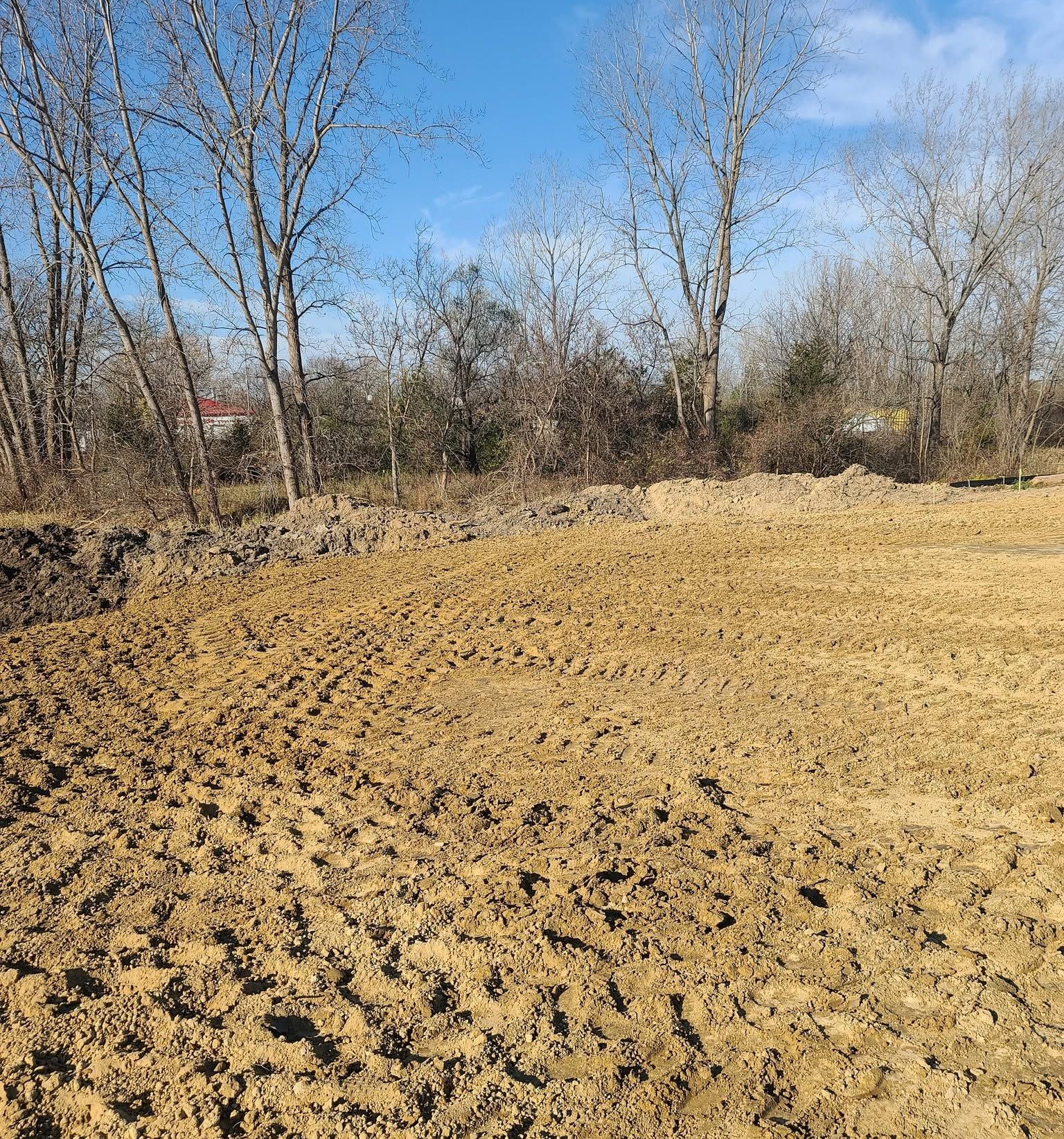
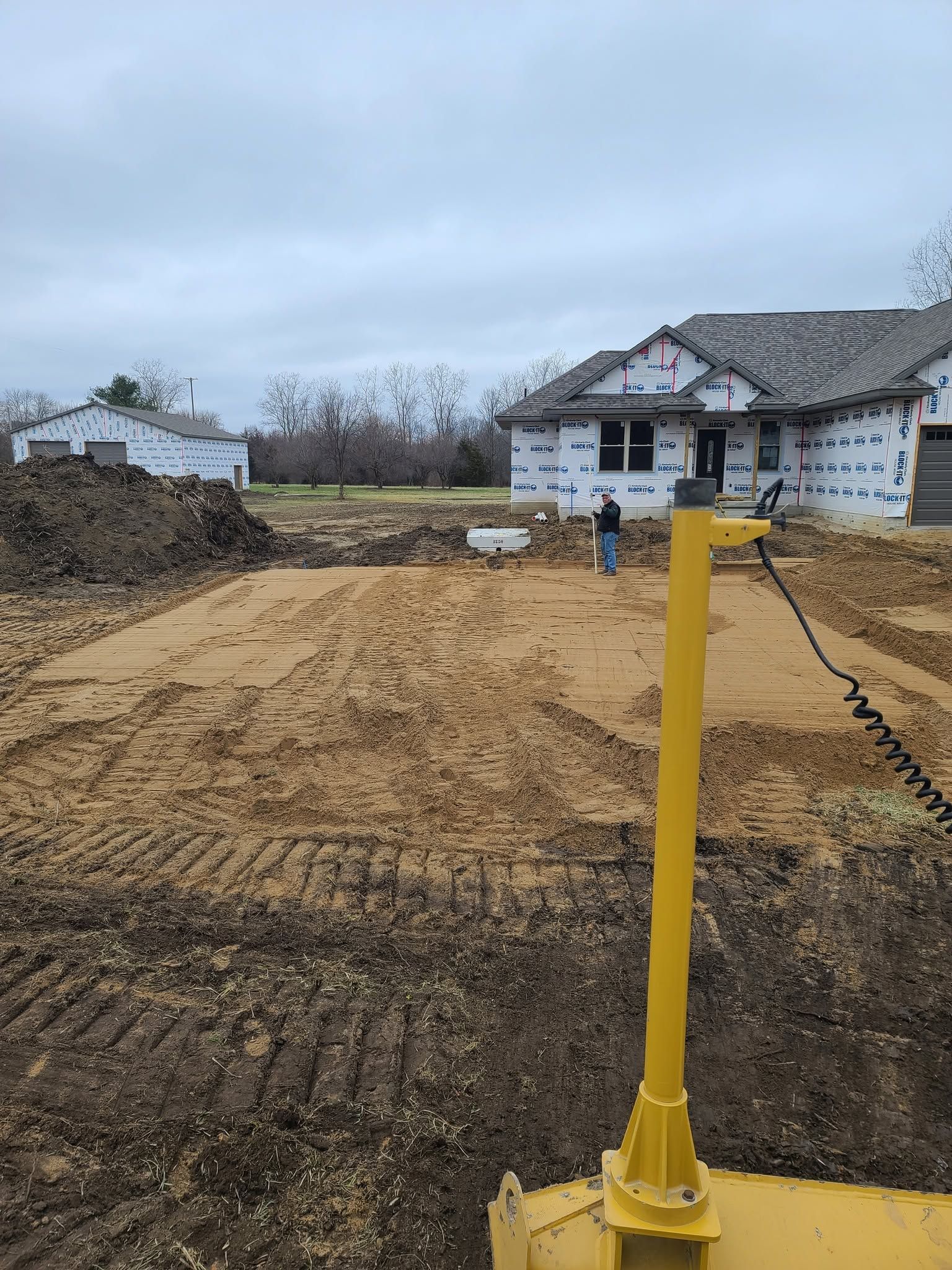
Once the ground is free of organic material, it can be shaped and compacted to the elevations the site plan calls for. Every foundation, driveway base, and utility trench that comes after this point depends on that ground being stable and clear of buried debris.
Erosion control isn't a separate afterthought — it goes in as soon as bare soil is exposed. The EPA's national menu of stormwater best management practices for construction sites calls for erosion and sediment controls to be in place promptly on disturbed soil, before runoff gets the chance to carry loose dirt off the property. A freshly cleared and grubbed lot is bare ground until grading and stabilization catch up, so on any project disturbing meaningful acreage, this step isn't optional.
Selective Clearing: You Don't Always Have to Clear the Whole Lot
Clearing every tree on a parcel isn't automatic. It usually isn't even the goal.
Clearing limits follow the site plan, not the property line. A contractor works from the footprint of the building, driveway, septic field, and whatever grading the drainage plan requires. Trees and vegetation sitting outside that footprint, especially mature trees that add privacy or shade, can often stay right where they are.
Protecting what stays takes planning, not just good intentions. Trees marked to remain need a buffer kept clear of equipment traffic, material stockpiles, and grade changes for the whole construction window, since compacting soil or cutting roots near a tree's base can kill it even when the trunk itself is never touched.
What happens to the material that comes out
usually falls into one of a few buckets: chipped and spread on site as mulch, hauled to a disposal or recycling facility, or, occasionally, salvaged if the timber has real value. Which option makes sense depends on volume, how easy the site is to access, and what the property owner actually wants done with it.
TIP: If you already know which mature trees you want to keep, walk the site plan with your excavation contractor and flag them before clearing starts. It's far easier to route equipment around a marked tree than to protect one that only gets identified after the crew is already on site.
Mid-Michigan Ground Conditions Add Another Layer
Clay-heavy soils across much of Genesee County and the surrounding area hold water a lot longer than sandy or loamy ground does, and that changes how a clearing and grubbing crew approaches a site. Wet spring conditions can leave a lot too soft for heavy equipment to work without rutting it or compacting the soil unevenly. Freeze-thaw cycles through a Michigan winter can shift ground that wasn't properly cleared and stabilized before the frost set in. Add standing brush and root systems that never got pulled, and that freeze-thaw movement makes uneven settling even more likely once construction gets underway. Timing the work around actual ground conditions, not just a date on the calendar, is what keeps the rest of the build on schedule.
Frequently Asked Questions
What's the actual difference between clearing and grubbing?
Clearing removes everything growing above ground, trees, brush, and vegetation. Grubbing removes what's left below the surface, stumps, root balls, and buried organic material. Both are needed before construction begins.
How deep does grubbing need to go?
Grubbing needs to clear roots and organic material within the construction limits down to stable subgrade. Roots well below where a foundation or trench will be dug can sometimes remain.
Can stumps just be ground down instead of pulled out?
Only in areas that will never be built on or compacted. Grinding chips the stump but leaves the root ball underground, fine under lawns but not under pavement or foundations.
Do I have to clear every tree on my property?
No. Clearing limits follow the footprint being built, the structure, driveway, septic field, and required grading, not the full property line. Mature trees outside that footprint can often stay put.
What happens to the trees and stumps once they're removed?
Removed material is typically chipped and spread on site as mulch, hauled to a local disposal or recycling facility, or occasionally salvaged for its timber value, depending on site access.
How long does clearing and grubbing take on a typical residential lot?
A standard residential lot is cleared and grubbed within a matter of days, though tree density, acreage, and site access affect the timeline. Larger or wooded parcels can take longer.
What Cleared and Grubbed Ground Makes Possible Next
A stump pile does not look like progress, yet clearing and grubbing are what make everything after them possible. Ground that has been fully cleared, grubbed, and stripped of organic material is ground that grading, compaction, and foundation work can count on for years. Rushing past either step, or treating grubbing as optional, tends to surface later as regrading, re-compacting, or settled ground that needs correcting long after the crew has moved on to the next project.
Phillips Trucking and Excavating
has spent 26
years working through Mid-Michigan's clay soils and freeze-thaw cycles from its base in Swartz Creek, MI. That kind of familiarity with
local ground conditions
shapes how a crew times the work, sequences each pass, and decides what stays versus what comes out. A lot that starts wooded and overgrown does not need to stay that way, not once the surface layer is gone and the ground underneath is finally doing what it needs to.